
How to choose a sports steering wheel?
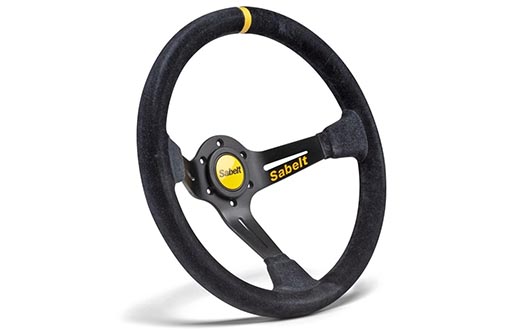
Steering wheel A sports steering wheel can completely change the feel of driving – it shortens hand movements, improves grip confidence, and facilitates precise course correction. However, in order to gain control and not problems, you need to match it to your car and driving style: one solution will work for everyday street driving, another for the track, and yet another for drifting. The diameter, thickness, and profile of the rim, the material of the cover, and the offset are key, as these parameters affect ergonomics in car Seat and the work of the wrists in corners. Equally important is compatibility with mounting hardware (hub/steering wheel hub, bolt spacing) and cockpit space.
First, select the diameter and profile of the rim according to your riding style, then adjust the offset to your position behind the handlebars, and finally make sure that the steering wheel hub hub and bolt spacing fit your bike and do not cause any slack or collisions with the shifters.
Choosing a sports steering wheel step by step
Start by determining the application, because "sporty" does not always mean "better for everyone." For street driving and occasional trips to the track, a compromise is important: steering wheel should improve precision, but it must not hinder maneuvers and everyday car operation. In drifting, a full circle and predictable grip during interceptions are important, while in track driving, a faster steering response is often desired, so a diameter and profile are chosen that shorten hand movements without losing feel.
- The diameter of the steering wheel affects the "speed" of feel: a smaller diameter accelerates response but can increase the feeling of nervousness and require more force, especially when the power steering is weaker or the car has a heavier front end.
- Choose the thickness of the rim to suit your hand and gloves: too thin forces a stronger grip and tires you out faster, while too thick can make delicate adjustments difficult.
- The material of the trim is not just a cosmetic feature – suede and high-grip surfaces provide excellent grip when wearing gloves, while leather is usually more resistant to everyday wear and tear and easier to keep clean.
Steering wheel Rally and sports: what is the real difference between them?
Steering wheel In practice, rally gloves are more of a "tool" than an accessory, because they work in conditions of impact, vibration, and large changes in grip, where it is easy to lose your grip. That is why in rallying, what counts most is a secure, stable grip and predictable hand movement in gloves: a full circle, clear thumb support, and high-grip material that does not slip in moisture and dust often win the day.
The diameter is selected according to the steering ratio and the force on the steering wheel: too small a diameter can cause nervousness and make it more difficult to "catch" the car on uneven surfaces, while too large a diameter slows down corrections in corner sequences. The offset in a rally car has a huge impact on ergonomics, because with a bucket seat and seat belts, the driver sits stably and usually deeper, so steering wheel must be positioned where the elbows remain slightly bent and the shoulders are not pushed forward. It is also worth remembering that in rallying, the stiffness of the set is important: a well-fitting steering wheel hub and no slack translate into a better feel of the front and less hand fatigue.
Car steering wheel dimensions: what matters?
The dimensions of a car steering wheel are not just about diameter, but a whole set of features that affect your position behind the wheel, feel of the front and repeatability of movements. The most important ones are: diameter (outer rim dimension), thickness (how "full" the steering wheel feels in your hand), profile (round, flattened bottom, strong contouring under the thumbs), as well as offset, i.e., how far the rim is shifted towards the driver relative to the mounting plane. In addition, the geometry of the arms is important: do they obscure the gauge, do they leave room for the shifters, and do you have enough space around "3 and 9" for your thumbs to work freely and your hands to be stable? In motorsport, these dimensions are always selected for the entire driver's position – car Seat a, belts, column settings, distances, and any quick-release connectors – because it is the sum of these elements that determines the final ergonomics.
Steering wheel diameter: how does it affect handling?
The diameter of the steering wheel affects how quickly the car responds to hand movements and how much force is required to turn. A smaller diameter usually gives the impression of more direct handling, shortens hand movements, and facilitates quick changes of direction, but it can also increase the "nervousness" of the car and require more effort, especially when the system has heavier resistance and power steering is limited. A larger diameter acts like a larger lever: it makes turning easier and can calm the handling on bumps, which can be beneficial in cars with slower gear ratios or in applications where wrist stability is important. When choosing the diameter, think about how you use your hands in your discipline: on the track, repeatability of lines and precision in corners are important, in drifting, it is important to intercept and release the steering wheel, and in fast street driving, it is also important to maneuver comfortably.
Steering wheel Offset: when does it make sense?
Steering wheel Offset is one of the simplest tools for improving ergonomics mii, especially in cars with car Seat bucket seats and seat belts, where the driver sits stably and often further away from the column than in a standard interior. Offset brings the steering wheel closer, making it easier to keep your elbows slightly bent and your shoulders in a neutral position, which translates into more precise handling and less fatigue in your hands and forearms.
- However, you need to be aware of the side effects: too much offset can limit the visibility of the gauges, cause your hands to come into contact with the shifters or steering column housing, and in extreme cases, make it difficult to get in and out of the car.
- In practice, the most important thing is to calculate the "total depth" of the entire set, because the final position is influenced not only by the steering wheel itself, but also by the steering wheel hub /hub, any quick release, and spacers.
- A well-chosen offset makes movements shorter and more precise, and the grip remains stable even during sudden corrections.
How to change the shape of the handlebars?
Changing the shape of the steering wheel usually means choosing a different rim profile, rather than "tuning" for appearance alone. A full circle is the most versatile in motorsport because, regardless of the position of the hands, you always have the same cross-section fIA and it is easier to make smooth catches, which is important in drifting and in emergency situations. A flattened bottom (D-shape) can make it easier to get in and give more room for your knees, but in dynamic driving, when your hands often change position, it can be less predictable when grabbing the wheel. Thumb profiling and a distinct "grip" on the sides improve grip stability on uneven surfaces and during braking, which is why such solutions are popular in fast cars and rally cars. It is safest to treat the shape as an ergonomii element: choose a profile that supports your driving technique, and only then adjust the diameter, thickness, and offset so that the whole thing works as a coherent set.
Car steering wheel construction
The construction of a car steering wheel has a direct impact on its stiffness, weight, and ergonomics, and consequently on how you "feel" the car and how precisely you can steer it. The basic elements are the rim (grip section), spokes, and the central part that attaches to the hub/nub, and, depending on the design, also the control elements and, in production cars, the airbag system. In steering wheel sports wheels, the priority is rigidity and a secure grip, so a simpler design with a strong core and a rim selected for the operating conditions is often found. The connection to the car is equally important: the fit of the hub, the quality of the assembly, and the right fasteners determine whether the set will work without play. Good sports steering wheel does not "forgive" poor assembly – if there is any play mini, the feel immediately deteriorates during dynamic driving and hand fatigue increases.
RRS
| Model | Diameter [mm] | Offset | Material | Handle |
|---|---|---|---|---|
| MONTE CARLO | 330 | 39 | leather | |
| RALLY | 350 | 90 | suede | round 31 mm |
| TRACK | 330 | 39 | suede | oval 28 × 38 mm |
| TRAJECT | 350 | 90 | suede | oval 28 × 36 mm |
IRP
| Model | Diameter [mm] | Offset | Material | Handle |
|---|---|---|---|---|
| Steering wheel sports suede | 350 | flat | suede | oval |
| Steering wheel sports leather | 350 | 90 | leather | round |
| Steering wheel sports suede | 350 | 90 | suede | |
| Steering wheel sports suede (set) | 350 | flat | suede | oval |
Sparco
| Model | Diameter [mm] | Offset | Material | Handle |
|---|---|---|---|---|
| R383 LOGO | 330 | 39 | suede | oval 37/29 |
| P300 | 320 | 39 | suede | oval 35/24 |
| P310 Open | 310 | flat | suede | oval 35/28 mm |
| R345 | 350 | 94 | suede | oval 32 × 30 |
OMP
| Model | Diameter [mm] | Offset | Material | Handle |
|---|---|---|---|---|
| Recce | 350 | flat | suede | round 30 mm |
| 320 ALU SP | 320 | flat | suede | oval 24 × 35 mm |
| CORSICA OV SUPERLEGGERO | 350 | 95 mm | suede | 19 × 39 mm |
| SUPERQUADRO | 330 | flat | suede | oval 27 × 35 mm |
Sabelt
| Model | Diameter [mm] | Offset | Material | Handle |
|---|---|---|---|---|
| SW-390 | 350 | 90 mm | suede | 30 mm |
| SW-732 | 320 | flat | suede | |
| SW-833 | 330 | flat | suede | 30 mm |
| SW-733 | 330 | flat | suede | 30 mm |
Summary: how to quickly choose a sports handlebar
- If you mainly ride on the street and want to improve ergonomics, choose a sports handlebar with a moderate diameter, durable covering, and offset adjusted so that your elbows are slightly bent.
- On the track, look for a compromise between responsiveness and stability in corners, so choose the diameter and thickness of the rim for precision, not the "smallest possible."
- For drifting, a full circle and a secure grip for interceptions usually work best, while in rallies, the priority is stability with gloves and resistance to impulses from bumps.
- If you are completing the assembly, start with the steering wheel, and for faster entry, consider quick Release.
- When fighting for position behind the wheel, check the steering wheel distances, and to complete the set, choose items from the steering wheel accessories category.
- If you want to compare models for specific uses, see rally handlebars and tuning handlebars.